
Customer growth for service businesses
I help excellent businesses build excellent distribution.
How people find you, choose you, come back, and send their friends.
22 years in corporate, as a technical specialist. The last eight at Nedbank, one of South Africa’s four big banks, in customer growth.
Meet Shei · 4 minutes
I help excellent businesses build excellent distribution. If you’re watching this video, it’s because you’re on my home page and you can see those words to one or other side. What does it mean? I’m going to explain it here, and I’m going to do it in three parts. Part one, we’re going to talk about what distribution is. Part two, we’re going to talk about why it matters. And part three, we’re going to talk about how you can use the insights from understanding it to ascend the profitability ladder in your business.
So, part one. What is distribution? Here’s a way that we can picture any business. It’s got two parts. Part number one is the offer. This is the thing that you actually do for your customers. In order for a business to be sustainable, your offer has to generate more value for them than the money that they pay you. This has to be there. It is the foundation of every business. But on its own, it is not enough. That’s where part two comes in: distribution.
Distribution is everything that carries your work to the people who need it. In this picture, the height of your offer and the height of your distribution is an indication of its quality. The higher it is, the better the quality. The width of the final diagram is how many people it reaches in the world. And the crowd of people at the top is an indication of the demand there is for your product or service.
So let’s talk about point number two. Why does this matter? There’s a common wisdom. Peter Thiel wrote about it in his book. Everybody says this. It goes something like: an average offer with excellent distribution beats an excellent offer with average distribution, every time. It doesn’t really feel right, but that is, unfortunately, how the world works. So if you have an excellent offer but you’re not thinking about your distribution, you are leaving significant value on the table.
Now let’s talk about part number three: the profitability spiral. Everything we’ve discussed so far has been a snapshot, but we need to think about how this changes over time. So at point number one, you start off with an excellent offer. If you begin to lean into your distribution, you can get to a point where the demand for your offer exceeds the supply. This is what Daniel Priestley calls being oversubscribed.
When you’re oversubscribed, you can do two things. The first one is you can raise your prices, and the second is you can begin to pick and choose the work you’re going to do. Simply by raising your prices and picking and choosing the work you’re going to do, it’s going to allow you to lean into that work even more and generate a better offer, which, if you’re focusing on your distribution, will continue to be oversubscribed. And you can continue to ascend this profitability ladder. Alex Hormozi says that sometimes the path to growth is not through more customers, but better customers.
I help excellent businesses build excellent distribution, so that you can grow your business, earn more money, do better work, and end up working with the people you really want to work with. It sounds overly fantastical and magical, I know. I’m not promising that it’s going to happen in one moment. You can always optimise what you are doing. There’s always the next step, and after that, the next step. You can always be moving in the right direction.
Have a look around the site. If you want to book some time in my calendar, I’d love to hear what you’re working on. Or you can take the Quick Read and get an idea of where you should start working on your distribution, in order to get started.
Who I am
My story, and why I am doing this
I have spent twenty two years unlocking value from data. The last eight were at Nedbank, one of South Africa’s four big banks. I worked in its centre of excellence for customer acquisition and lifecycle management.
The standard there is high and the people are exceptional. That is where I learned what excellent distribution looks like when it is built properly.
Now I do that same work for smaller businesses. It starts with a website, and the website is the smallest part.
I trained as an engineer. Then I took a master’s in computer science, and later an MBA. Deep technical skill on one side, and how a business actually makes money on the other. Putting those two together is the whole of what I do.
At Nedbank that meant using data to decide who to talk to, and what to say to them. The work was rigorous and it was measured, and I am really proud of what we built there.
I would still be doing it. My wife’s career opened a door in Canada that was too good to leave on the table, so we took it as a family and moved to a small town in Nova Scotia.
What AI can do now is why one person can build, for a small business, the kind of distribution that used to need a bank behind it. The building blocks are cheap. Knowing which ones your business needs, and putting them together properly, is the work.
So you get a great deal more than a website.
Everything I sell runs on my own business first. The guides, the assessments, the follow-up. You are looking at it.
22 yrs
in corporate, as a technical specialist
8
at Nedbank, in customer growth
17
building blocks, every price public
5 min
to see where to start
What I sell
So what am I selling?
When I left corporate I went looking for leverage. Where is the value that nobody is unlocking?
I think I have found it.
An excellent business is usually sitting on a great deal of value it never sees, because how good it is does not show up properly in the world.
That does not fix itself. Being excellent at something does not mean anyone will find out. The work is good, the customers who know are loyal, and everybody else has no idea you exist.
Everyone knows this. The people who act on it are running very profitable businesses.
We are taught that the best work wins. So we pour our time into the work, and almost none into who hears about it.
An average offer with excellent distribution beats an excellent offer with average distribution, every time.
“If you have an excellent offer but you’re not thinking about your distribution, you are leaving significant value on the table.”
Who it is for
Who this is for
Excellent service businesses. Your customers love you. The rest of the market cannot tell how good you are.
You are excellent at the work. You do not have the time or the attention to be excellent at telling the world about it too.
That is a harder problem than it looks, and it is hardest for the best businesses.
It is not for you if
- you sell products online
- you only want ads run
- you want a prettier website with nothing behind it
The model
Here is my model of distribution, on one page
Every service business runs on the same parts. How people find you. Why they trust you. How they choose you and pay you. Why they come back and send their friends.
Together, those parts are your distribution. This is what it looks like when you can see all of it at once.
01Get Found
A great site nobody sees is a billboard in a jungle.
02Earn Trust
They found you. Now they are deciding whether to believe you.
03Get Chosen
A visitor with a job to be done, and the small mechanical steps most practices leak at.
04Keep & Grow
The profit is in the second sale, and in the money stage nobody systematises.
Hover over any block, or tap it on a phone, to see what it does.
A free assessment, about fifteen minutes
You don’t need every block. You need your few.
There are seventeen blocks in that picture. Almost nobody needs all of them.
The hard part is knowing which ones. So I built an assessment that shows you where to put your energy first.
What it costs
What it costs
Everything starts with the baseplate, which is the site and the foundations under it. You pay once to build it, and monthly to keep it working.
You add only the blocks your business needs. Each one has its own price, and building several at once costs less than building them one at a time.
Every price is on the pricing page. There is nothing to ask for.
The guides
I wrote down everything I know about this
Nearly sixty plain-language guides covering every block in the picture. How a business gets found, trusted, chosen, paid and referred.
They are free and they ask nothing of you. Read them and do it yourself if you like.

Start here: the idea it all runs on
Distribution

The whole system, mapped
The Distribution System

The differentiator
Everyone Has the Same Ingredients
Essays
I also share what I am thinking about
Essays as I write them, on the work and on running a business.

On margins and probabilities
I leave an hour early for the school run so my kids see me standing there. The day I did not, I had the time wrong, and both of them were crying.

Long before I dance under those lights
Muhammad Ali said the fight is won far away from witnesses. So is almost everything else, in the part of a business no customer will ever see.
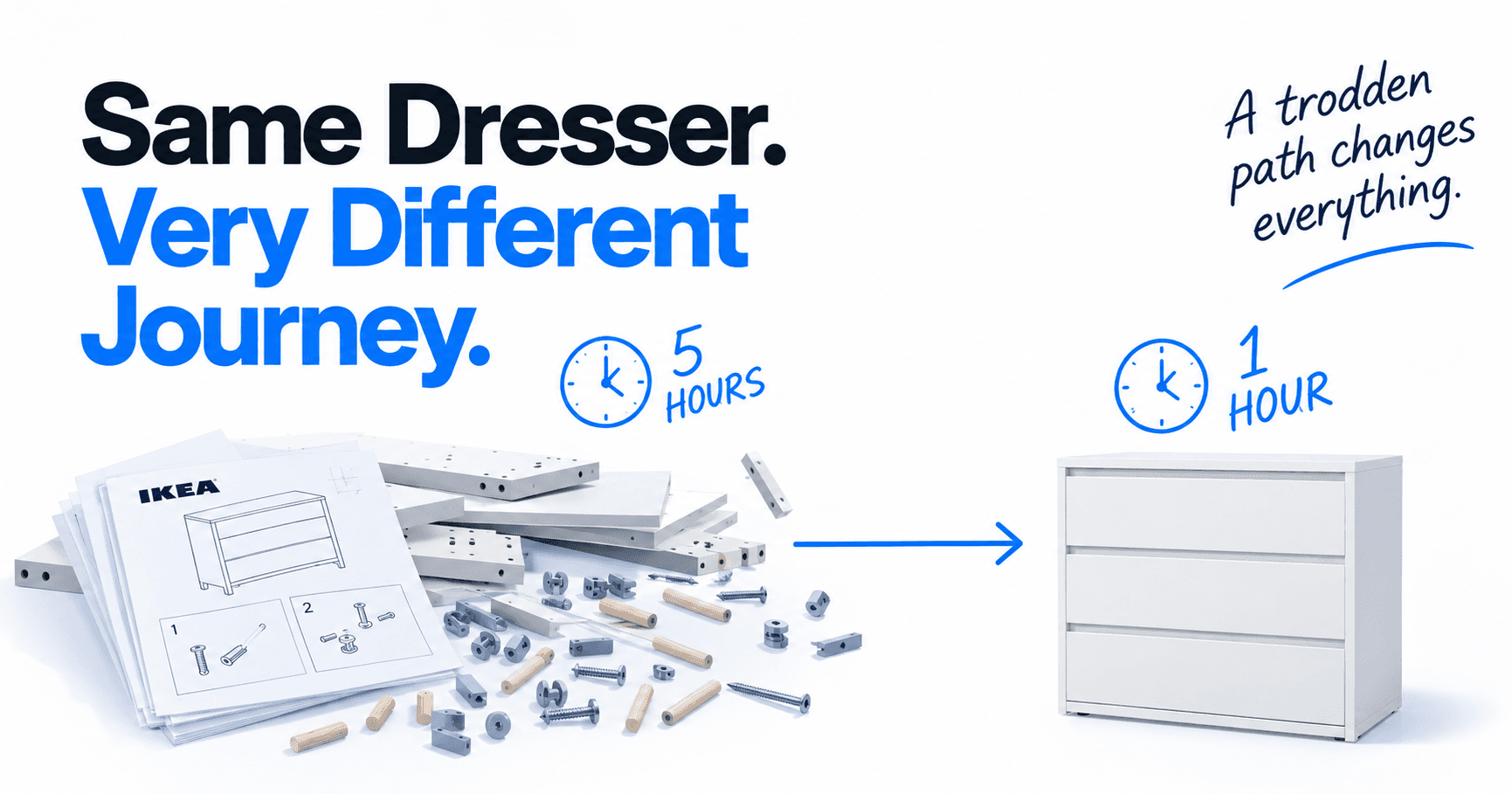
The first dresser took five hours. The second took one.
Same dresser. Very different journey.
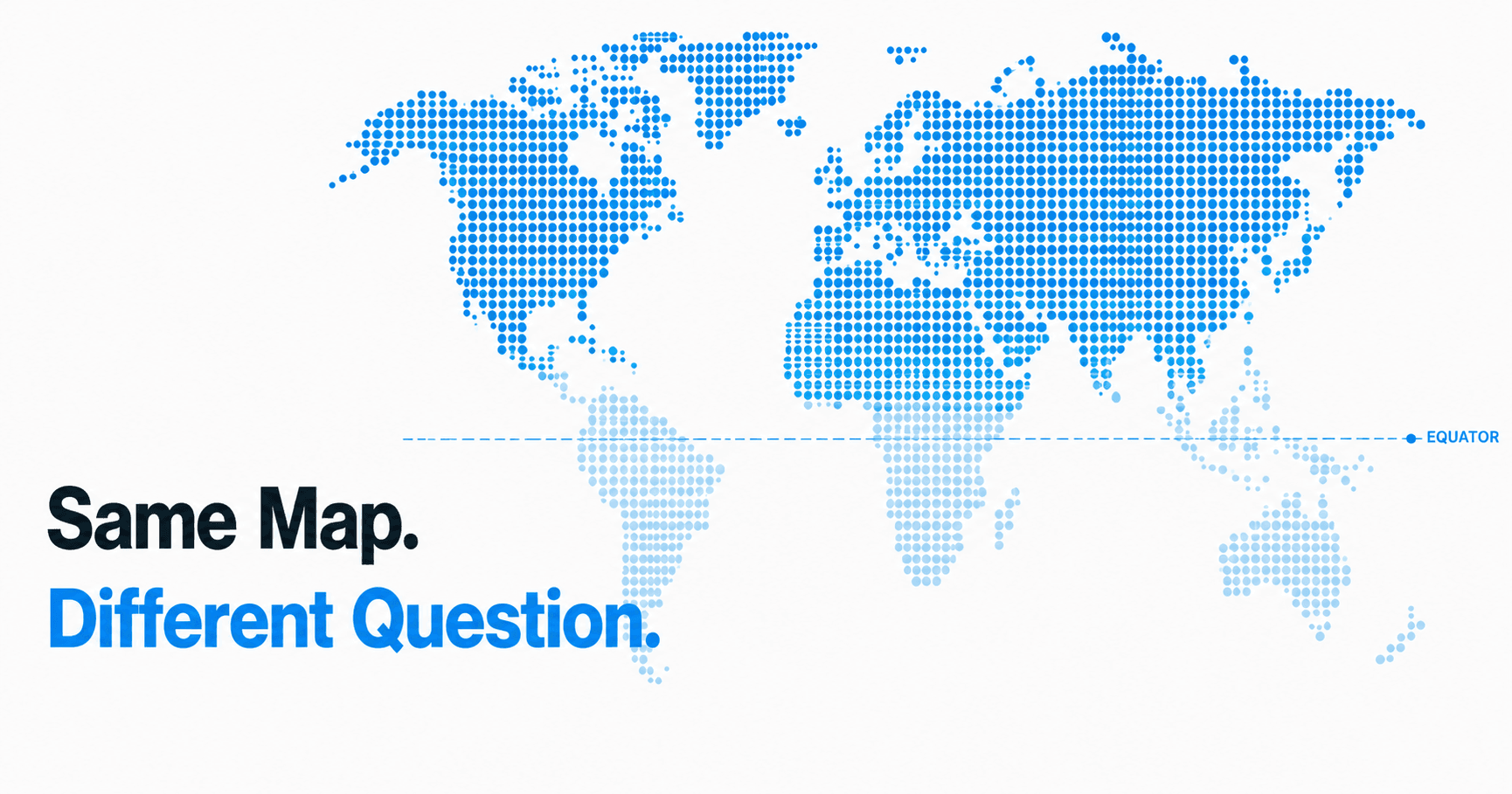
The facts were staring us in the face
The data was always there. Nobody had asked the right question.
Questions
Questions people ask
Who do you work with?
Owner-run service businesses where one new client is worth real money. Think accountants, mortgage brokers, clinics and consultants. If a new customer is only worth a few dollars, the numbers rarely add up.
Is this just a website?
No. The website is the front door, and it is the smallest part of the job. What brings you work is everything around it. Being found, being trusted, being chosen, and being remembered.
What does it cost?
Every engagement starts with the baseplate. That is US$2,200 to build and US$220 a month. You add only the blocks your business needs. Every price is published on the pricing page.
How do I know it is working?
Every site is measured with analytics. The analytics are built around what your site does, such as how many people downloaded your guide.
Can you guarantee I will be booked out?
No, and nobody honestly can. Booked out is the aim.
Can you get ChatGPT to recommend me?
I can make it much more likely. Nobody can guarantee it. Anyone who says otherwise is selling you something.
What happens first?
We talk. Tell me what you are working on and I will give you a straight read. If it looks like a fit, you run the full assessment, so we are both working from your real numbers. Then I build first, and you decide once you have seen it.
