Turning Visitors Into Work
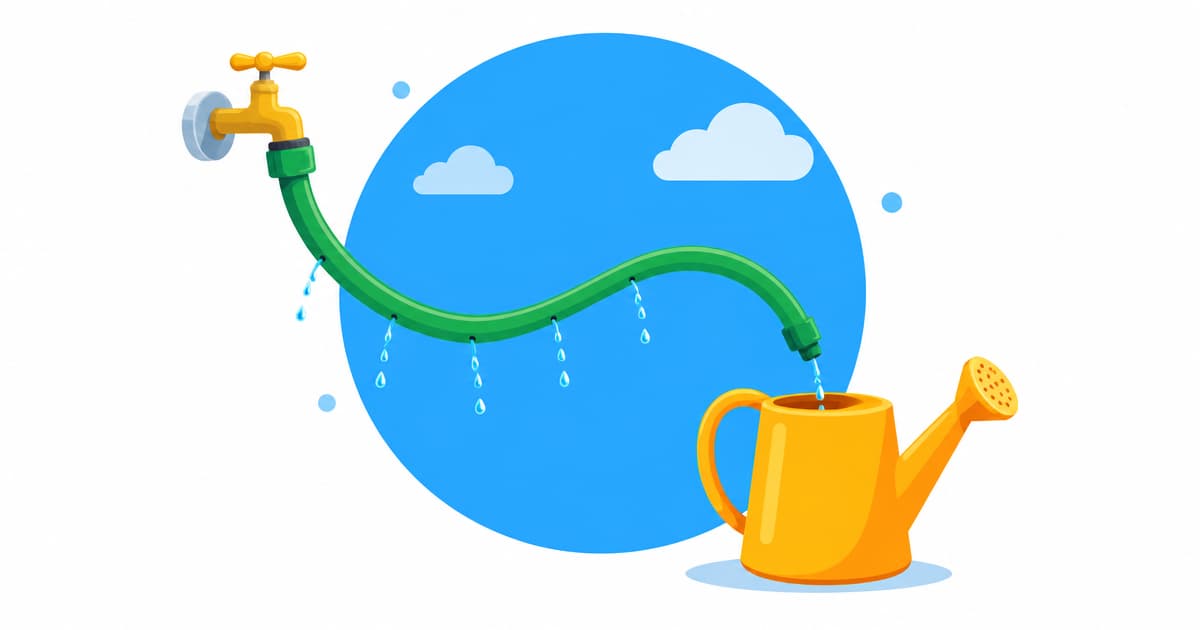
Between someone deciding to trust you and money arriving sits a run of small steps: enquiry, capture, follow-up, booking. Most practices leak at each.
An accountant gets a referral on a Tuesday. The prospect looks them up that evening, likes what they see, and fills in the contact form. The form sends an email. The email lands in an inbox that already holds two hundred unread messages, between a newsletter and a notification about a shared drive.
The accountant finds it on Friday. They reply, warmly and professionally. By then the prospect has met someone else, been quoted, and said yes. Nothing was broken. Everyone behaved reasonably. The work went elsewhere anyway, and it went there in about seventy-two hours.
This is the strangest part of the journey, because the hard part is already done. The prospect found you, believed you, and acted. What failed is the machinery that was supposed to catch them.
Get Chosen
The conversion sequence
Getting chosen isn't one event. It's a short sequence of mechanical steps, and like everything in this library, it only pays off end to end.
A ready visitor has to land on a page that speaks to them. Act, through an obvious next step. Get captured somewhere that isn't an inbox. Get answered before they cool. And get booked without a game of phone tag. Break any step, and the ones before it were wasted.
What makes this part different from the others: every step is cheap to fix. Trust takes months of reviews. Discovery takes patient compounding. But an enquiry answered in five minutes instead of three days is a decision and a small system, not a campaign — which is why, when this is where you're leaking, it's usually the fastest money you'll ever un-lose.
Where it breaks
The page does nothing. The visitor arrives ready, and meets a description instead of a door. No clear statement of who it's for. No price signal. No obvious next step. They were prepared to act, and the page never asked them to.
The enquiry lands in an inbox. An inbox is where enquiries go to be discovered on Friday. A captured enquiry lives somewhere with a state — new, contacted, booked — visible at a glance, so nothing depends on your memory of having seen an email.
The reply comes too late. Speed-to-lead is the most underrated number in a practice. The prospect who enquired is, at that moment, the warmest they will ever be. Every hour of silence cools them, and by the next day you're one of several conversations.
The call rings out. Enquiries don't keep office hours. The ones that arrive while you're with a client don't wait politely. They redial the next name.
Booking needs a negotiation. Three emails to find a Tuesday is friction a ready buyer shouldn't have to survive. Letting them pick a slot themselves removes the last step where the work can quietly evaporate.
What's in this cluster
What your website must do — the functional anatomy of a page that converts: the jobs it does the moment a ready visitor lands.
The offer that converts — the proposition itself, and the one obvious next step.
Why your tools don't talk to each other — for the practice that already bought the tools and is stuck on the assembly. The blocks are excellent. The connective tissue is the missing piece.
Where your leads actually go — from "enquiries land in my inbox" to a pipeline you can see at a glance.
The CRM in plain language — a person and a stage, nothing more. When a spreadsheet is genuinely fine, and the moment it stops being.
Following up before they cool — what to automate, and what stays human.
Never miss the call — missed-call text-back and after-hours cover, honestly assessed.
Qualifying who's worth your time — intake that sorts buyers from browsers before anything reaches your calendar.
Letting them book themselves — when self-booking wins, and what it removes.
Your next step
Time yourself. Send an enquiry through your own website — the form, the email address, the phone — and measure how long it takes for anything to happen, and where the enquiry ends up. If it landed in an inbox and the reply took hours, you've found the cheapest fix in this entire library.
Questions practices actually ask
How fast is fast enough? Minutes, not hours. The research on speed-to-lead is unambiguous: response inside five minutes is dramatically more likely to win the work than response inside an hour, and next-day is barely better than never. Automation can hold the door — an instant acknowledgement with a booking link — while a human follows.
Do I need a CRM for this? You need enquiries to live somewhere with a state. For a small practice that can genuinely be a spreadsheet, kept honestly. The tool matters far less than the habit of nothing sitting in "new" overnight.
Isn't instant follow-up pushy? Answering quickly isn't pressure. It's the thing the prospect hoped would happen when they pressed send. Pushy is what happens later, in the content of the messages, not in the speed of the first one.
I'm fully booked. Why would I fix this? Because conversion leaks don't just lose volume, they lose choice. A practice that catches every enquiry gets to pick the work worth doing and refer the rest, which is a different business from taking whatever survived the leak.