The One Question That Tells You If Marketing Works: Would It Have Happened Anyway?
The single most useful question about any marketing: if you hadn't done it, would it have happened anyway? An introduction to incremental lift, in plain language.
Here is the single most useful question you can ask about any marketing you do. It cuts through dashboards, attribution reports, and vanity metrics in one move:
If I hadn't done this, would it have happened anyway?
Most businesses never ask it. And because they don't, they spend money taking credit for results that were coming regardless. Understanding this one idea changes how you see every marketing number you'll ever look at.
The difference between response and effect
When you run a campaign and customers respond, it's natural to assume the campaign caused the response. Often, it didn't — or at least, not all of it.
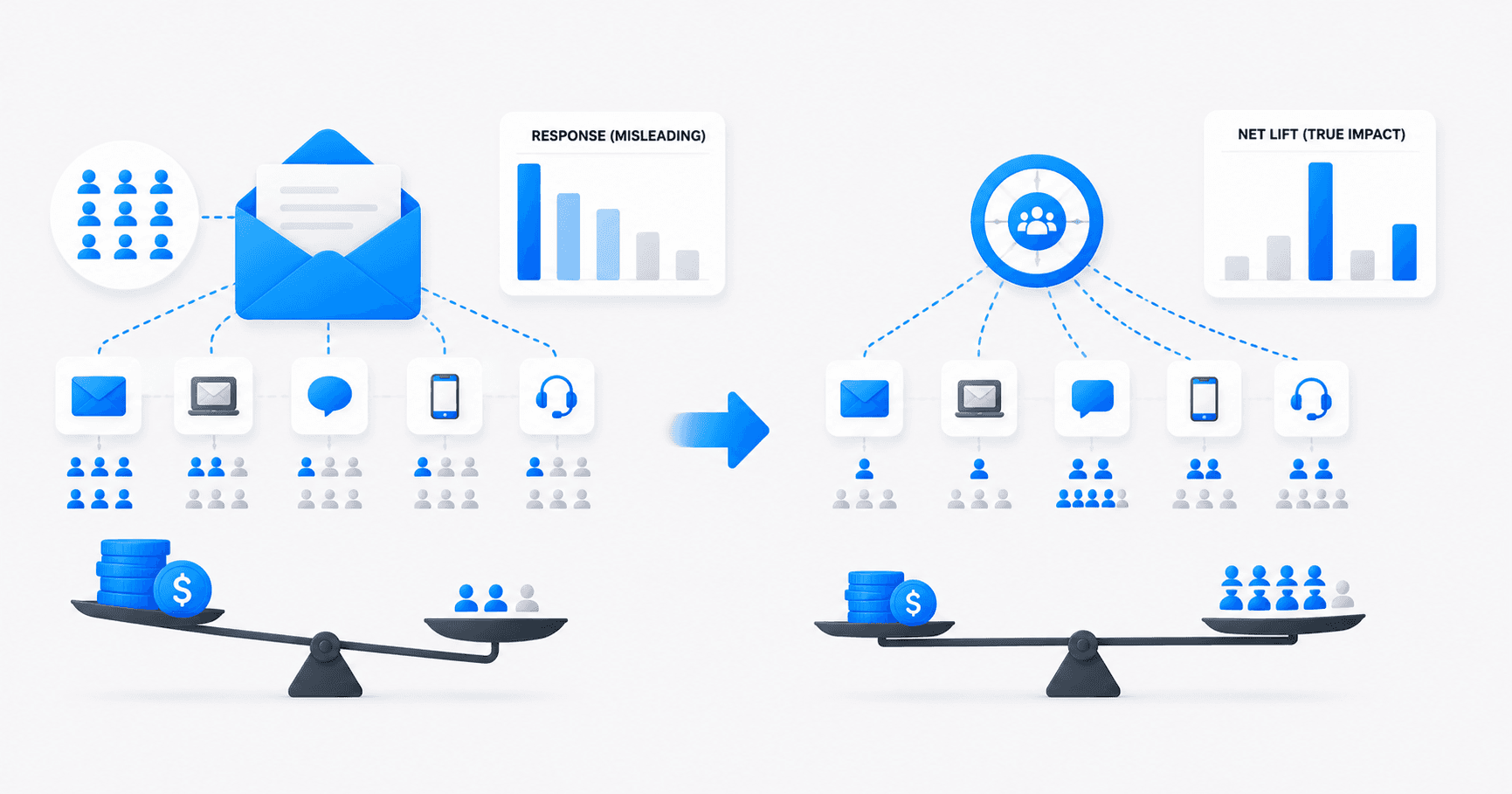
Imagine you email a discount to your existing customers and a hundred of them buy. Success? Maybe. But how many of those hundred were going to buy from you that month anyway? If the answer is eighty, then your campaign didn't generate a hundred sales. It generated twenty. The other eighty would have happened with no email at all — you just handed them a discount they didn't need.
The response was a hundred. The actual effect of the campaign was twenty. Those are wildly different numbers, and almost every standard report would show you the hundred and let you believe it.
This has a name: incremental lift
The extra results that happened because of your marketing — and wouldn't have happened otherwise — is called incremental lift, or just lift. It's the part that's genuinely yours. The sales that would have come anyway aren't lift; they're just sales, and your marketing doesn't deserve credit for them.
Once you start thinking in terms of lift, a lot of comfortable assumptions wobble:
- The channel with the best-looking response numbers might have the worst lift, because it's aimed at people who'd buy regardless.
- An expensive campaign can show plenty of "response" while causing almost nothing.
- Some of your most-celebrated marketing might be taking credit for your customers' existing loyalty.
This isn't a reason to stop marketing. It's a reason to find out which of your marketing actually causes results, and put your money there.
Why this is the question that matters
Vanity metrics tell you what got attention. Attribution tells you what customers touched. Neither tells you what your marketing actually changed. Lift is the only one of these that answers the real business question: am I better off for having done this?
It's also the hardest to fake, which is why so few businesses measure it and why it's so valuable when you do. A number that looks like lift is easy to produce; a number that actually is lift requires a bit of discipline — specifically, a fair comparison between what happened and what would have happened without you.
How you actually measure it
The good news: you don't need a data team to get a real answer. The core method is simpler than it sounds — you hold a comparable group back, run your marketing on everyone else, and compare the two. The difference between them is your lift, and it's about as honest a number as you can get. That method is laid out in plain terms here: how to test whether something works.
For a real-world example of this exact thinking applied at scale — where measuring lift instead of response revealed that most of a marketing budget was barely doing anything, and reallocating against it cut spend by well over half with no loss in results — see the importance of net lift.
If you want to know which of your marketing is genuinely causing results and which is just along for the ride, that's the core of what I help Canadian small businesses figure out. You can get in touch here.