AI Website Builders (Lovable, Replit, and Friends): An Honest Take
AI website builders like Lovable and Replit can turn a sentence into a working site. Honestly: what they're great at, where they fall down, and when to use one.
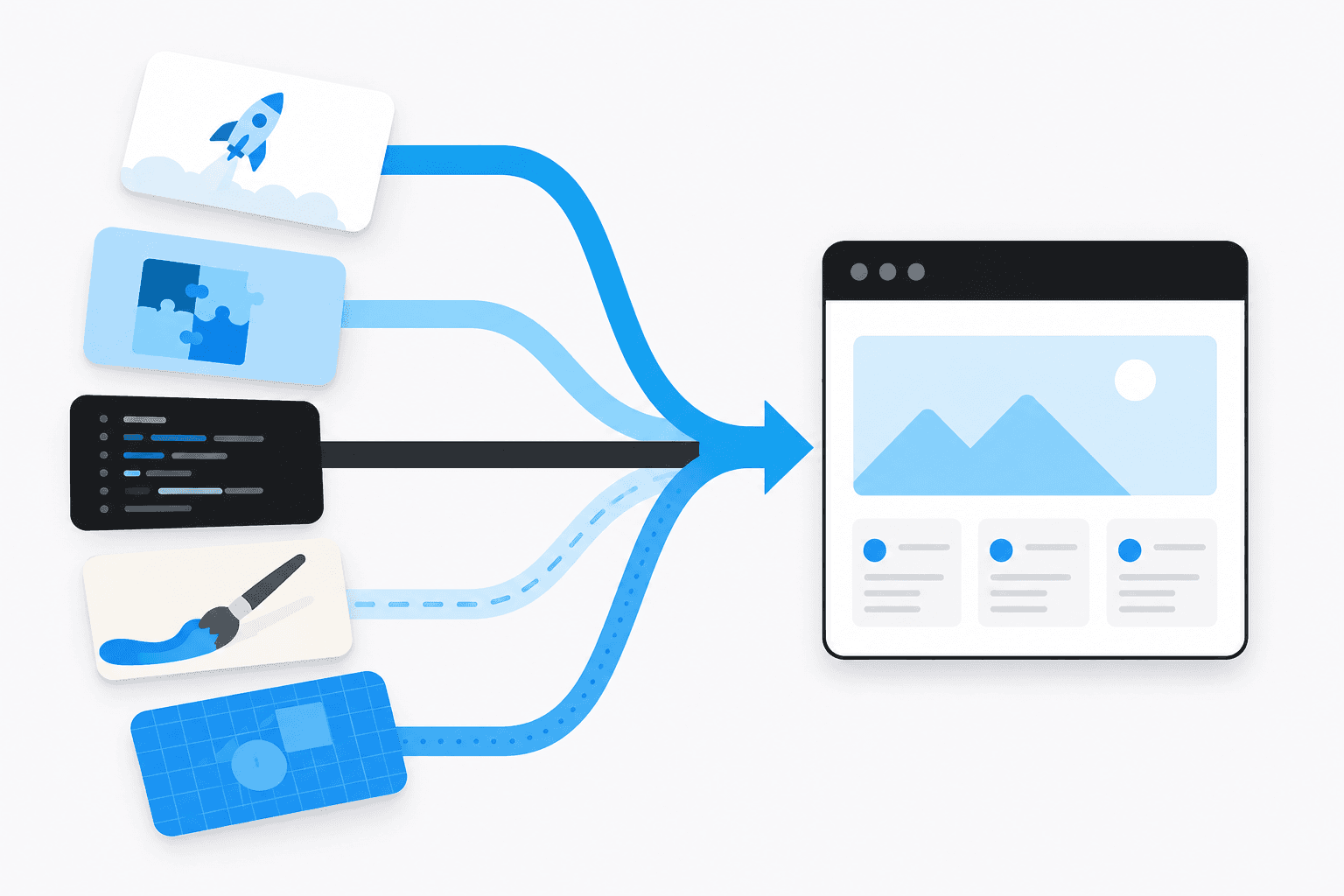
There's a newer way to get a website now, and it's genuinely a little startling the first time you see it. You type a sentence — "a clean site for my accounting practice, with a contact form and a page about pricing" — and a minute later there's a real website on the screen, with your pages, your buttons, your form. No template to wrestle, no designer to brief. You described it and it appeared.
The best-known of these are Lovable and Replit, and there's a growing crowd of others. They're worth knowing about. Whether they're worth betting your business on is a separate question, and the honest answer is: sometimes, not always, and it depends on what you're really after.
What they're genuinely good at
Let's give them their due, because the impressive part is real.
The speed is the headline. From a single sentence to a working first draft is a matter of minutes, and that draft is often a perfectly reasonable starting point — the layout makes sense, the words are roughly right, the thing actually works. If you've ever stared at a blank builder not knowing where to begin, that first draft is a gift. It gets you past the hardest part, which is starting.
They're also a wonderful way to think out loud. Don't like the layout? Ask for a different one and watch it change. Want to see your business with a calmer look, or a bolder one, or your colours instead of the defaults? You can try five versions in the time it used to take to brief one. As a tool for figuring out what you actually want, before you commit, they're hard to beat.
So for a quick draft, a rough idea made real, a way to see options — they shine.
Where they fall down for a real business
Here's where the honesty earns its keep, because the gap between "impressive demo" and "the site my business runs on" is wider than it looks.
Polish and the last ten percent. The first draft comes fast; getting it exactly right is where things slow to a crawl. The spacing that's slightly off, the wording that's almost-but-not-quite you, the way it looks on a phone versus a laptop — the closer you get to finished, the more you find yourself fighting the tool rather than directing it. The first ninety percent is minutes. The last ten can eat your week.
The edge cases. A real business site has fiddly bits — a form that emails you properly when someone fills it in, a booking link that actually connects to your calendar, a page that behaves when a customer does something unexpected. The further you get from "show some pages" and the closer to "do a job," the more these tools strain. They're better at the showroom than the plumbing.
Hosting and where it actually lives. When you build on Wix or Squarespace, your site lives on their servers and just works — that's the deal, and it's a good one. With some of these AI tools the picture is murkier: the site might live on their platform, or you might be handed the raw materials to host somewhere yourself, which is a real job with real ongoing care. Worth knowing before you start, not after.
And the quiet catch — owning code you can't maintain. This is the one nobody mentions, so I will. These tools don't just design a site; they generate the underlying code that runs it. That sounds like a feature — it's yours, you own it — and sometimes it is. But owning something you can't read or change isn't really ownership; it's a car with the hood welded shut. Six months on, when you need a small change, you may find that the only thing fluent in how your site was built is the AI that built it — and getting another person, or even a different tool, to safely touch it can be harder than building fresh. A plain Wix or Squarespace site, by contrast, almost any freelancer can pick up and adjust on a Tuesday afternoon.
When it's worth it — and when it isn't
I'm not here to talk you out of these. They're a real, useful thing, and they're getting better fast. But to be straight with you about the fit:
They're a great call when you want a quick draft to react to, when you're exploring what you want before you commit, or when you (or someone close to you) genuinely enjoy tinkering and aren't betting anything important on the result. As a thinking and prototyping tool, they're excellent.
They're a poor call when you want a thing that just works and stays working with no fuss — when this site is how customers find and judge you, and you'd rather not become its part-time maintainer. In that case the boring options are still the wiser ones: a tidy DIY builder or a solid freelancer will serve you better, precisely because someone can fix and change it later without a séance.
The thing that matters more, either way
Whichever way you go, remember the bit that's easy to forget while you're admiring a clever new tool: the website is the baseplate, not the business. A site built by AI in two minutes and a site agonised over for two weeks both do the same nothing if no one can find them, and if nothing good happens when they arrive. The real work — being found, and turning a visit into a customer — sits on top of the site and barely cares how the site got built. Don't let the magic trick of instant-website distract you from where the customers actually come from.
If you're weighing one of these up and want a plain second opinion on whether it fits your business — or whether a quieter option would save you grief — that's exactly the kind of thing I like looking at. Fifteen minutes, no pitch: you tell me how your business works, I tell you what I see. Have a look here.