
The Distribution System: Your Website Is One Part of It
The full anatomy of how a business gets found, trusted, chosen, paid, and referred — why distribution is a system of parts that compound, and why strengthening the ones that reinforce each other beats fixing any single thing.
Here's a scene you'll recognise.
Someone types your kind of business into their phone. It's 9pm. They find you. They land on your site. Decent photos. A services list. An About page. They spend maybe ninety seconds there.
Then they do the thing that costs you more than any ad ever could. They hit back. They call the next name on the list.
Why? Not because you're worse at the work. They never got close enough to find that out.
They left because the site gave them nothing to do. And no reason to believe. They came with three questions. Can this business solve my problem? Can I trust them? Can I get this moving tonight? The page answered none of them. No reviews to check. No answer to the actual question they were asking at 9pm. No way to book. No promise anyone would even reply before tomorrow. Just a description. Sitting there. Waiting politely to be read.
The next name on the list had forty-one Google reviews. A line that said exactly what they do and who for. A button that booked a slot for Tuesday.
That business wasn't better. It was just switched on at the moment of decision. And at 9pm, switched on wins.
How Strong Is Your Distribution?
Five minutes. No email until the end.
The real business is a customer system
The reflex here is to conclude "I need a better website." Resist that. It's exactly how good businesses end up buying the wrong thing.
A website is one part of something bigger. The real machine is the system that creates and keeps your customers. Every customer travels through it, whether anyone designed it or not:
They find you → they believe you → they choose you → they pay you → they come back → they send a friend.
- 1They find youA stranger who needs what you do comes across you, on Google and in the AI assistants people now ask first.
- 2They believe youWhat they land on answers the question they are really asking, which is whether you can be trusted with this.
- 3They choose youBooking you is easy, on a phone, at nine at night, and the enquiry reaches a person who answers it.
- 4They pay youThe quote, the deposit and the invoice all move on time. You never have to chase.
- 5They come backYou stayed in touch, so the next job comes to you too.
- 6They send a friendThey tell the people they know, and those people are the next ones who find you.
Every business has this system. Almost no owner has looked at it end-to-end. It's scattered. A website here. A Google profile there. An inbox. A phone that goes to voicemail while you're with a client. A pile of unpaid invoices. A vague intention to "stay in touch." Each piece belongs to a different tool. A different habit. A different afternoon. Nobody owns the whole thing.
So the system leaks. Not dramatically. Quietly. In ways that never look like a breakage. A missed call here. An enquiry answered two days late there. A delighted customer who was never asked for a review. Never followed up with. Never reminded you exist. Each gap just looks like "business was a bit slow this month."
One and one makes eleven
Here's the idea this whole library is built on.
Most owners treat distribution as a checklist. Found. Trusted. Chosen. Paid. Kept. Do each one, add up the wins. That's not how these parts behave — and the gap between the checklist and the truth is where most marketing money quietly dies.
Start with the freeing half. You don't need all of them. A practice can run no ads, post nothing on social, sit invisible to AI — and still thrive, as long as the parts it does have are strong and wired together. A part you're missing costs you exactly what that part would have brought in. Nothing more. It doesn't drag the rest to zero. So the fear that drives most marketing decisions — "we're not doing X, we must be falling behind" — is usually backwards. You're not failing. You're leaving one part's contribution on the table, and you can pick it up whenever it's worth picking up.
Now the half almost nobody acts on. The parts that are switched on don't sit politely side by side and add up. Wired together, they multiply each other. Reviews make your ads convert harder. A fast reply makes those reviews worth chasing. The client you followed up with becomes the referral who arrives already sold — and leaves the review that makes the next ad convert harder still. Every improvement to one part lifts every part it touches.
Which is why the return on a connected system isn't one-plus-one-equals-two. Stand two parts that reinforce each other side by side and the honest arithmetic is closer to one and one making eleven. Not a bigger number — a different order of magnitude. Picture the 9pm searcher who finds you, sees forty reviews, gets an instant reply, and books a slot for Tuesday. They didn't experience four small conveniences they'd tot up in their head. They experienced one overwhelming reason to stop looking. The parts stopped being features. Together they became a verdict.
So the real work is neither thing the industry sells you. Not hunting for the single thing that's wrong and pouring everything into it. And not buying all of it at once, spread so thin nothing gets built well enough to compound. The work is to find the two or three parts that would reinforce each other most — and build those properly, and connected. The eleven doesn't live in any one part. It lives in the wiring between them.
The map: the system, its instrument panel, and its foundation
This library walks the system part by part. What each one is. How it leaks. What's honestly worth your money.
Get Found — strangers can't hire you if they can't find you. The classic leak: an excellent practice, invisible at the moment someone needs it.
Get Found by AI — discovery's second front door. When someone asks ChatGPT who to call, the answer is the shortlist. The leak: being recommendable nowhere an assistant looks.
Earn Trust — found isn't believed. The leak: no proof a nervous stranger can check at 9pm.
Get Chosen — believed isn't booked. The leak: the enquiry that sat unanswered for two days.
Get Paid — booked isn't banked. The leak: the invoice you're still chasing a month later.
Keep Your Customers — the profit is in the second sale. The leak: the delighted client you never contacted again.
Measure What Matters — the instrument panel over the whole system. The leak: numbers that go up and prove nothing.
The Foundations — underneath everything: your domain, your hosting, your email. The question: do you actually own your own front door?
How to use this map
Like an operator, not a shopper. The method is a loop:
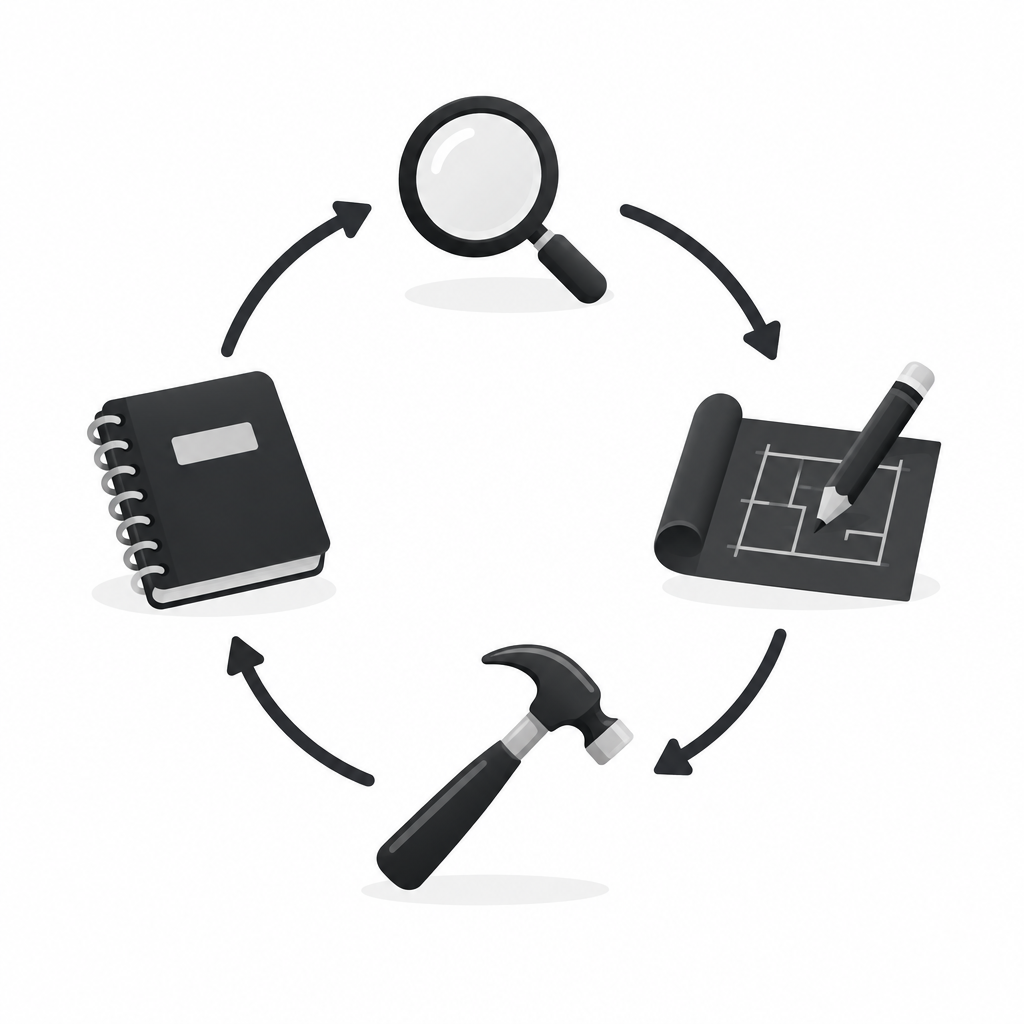
- Assess. Walk your own system honestly, with real numbers where you have them. Where do the most people fall out? Which parts are switched off completely? And which two, strengthened together, would feed each other? (The Distribution Assessment walks you through this step by step.)
- Design the smallest system that compounds. Not the platform with nineteen features. Not one tweak done in isolation. The specific parts whose strengths multiply together. Built to connect. So each one makes the others worth more.
- Build it properly, and connected. Implement each piece well. Wire them together. So the review feeds the ad. And the fast reply feeds the review. Excellence in each part. The connections are where the compounding actually lives.
- Learn. Measure whether it worked. Not "does it look better." Did more strangers actually become customers? Every improvement changes the system. Strengthen two parts. A third part that was fine before becomes the next thing worth your attention. So the loop runs again. Assess, build, measure, repeat. That's not failure. That's the system getting stronger. It's why growing a business is a practice, not a project.
There are two extremes the industry pushes you toward. Neither works. Buying all of it at once. So nothing gets built well enough to compound. Or believing a single fix is the whole answer. Anyone selling you seven systems before looking at your numbers is telling you something about their business model. So is anyone selling one silver bullet that supposedly solves everything. Neither is telling you about your problem.
How I work (and why this library exists)
I should be plain about who's writing this.
I'm a distribution consultant. Not a web designer. Not a generic AI consultant. My work is exactly the method on this page. Strengthen how a business gets found, trusted, chosen, paid, and referred. Build the parts that compound into one system that runs while you do the actual work.
The work starts with your website. Not because a website is the answer. It's because a website is the hub everything else plugs into. And I can't improve a system I don't hold. From there we add the parts that reinforce it and each other. Capture and follow-up, so enquiries stop leaking. A CRM, so nothing falls through. Content that earns discovery over time. Review and reputation management that makes every other channel convert harder. Some clients take one piece. The ideal engagement builds the whole loop. That's where the compounding lives.
I work as an integrator, not a builder. The individual pieces are excellent, and they get cheaper every month. Booking tools. CRMs. Review platforms. Follow-up automation. The scarce skill is putting them together so they multiply instead of just sitting side by side. That's the real craft, and it deserves its own page →
And I run my own business exactly this way. This site is the system I sell. The same machinery underneath. Capture. Follow-up. Booking. Measurement. The same build-what-compounds method. Tested on myself before any client sees it. This library is that method made public.
Questions worth answering straight
Do I need all of these systems? Not on day one. But more than one, almost always. Because they compound. We start with the website. Then whichever parts are switched off and worth switching on. Then the ones that reinforce them. The goal is the whole loop working together. We build toward that deliberately, not all at once.
What if I don't know where to start? That's completely normal. The system is spread across tools and habits nobody's ever looked at end-to-end. The Distribution Assessment exists for exactly this. It scores every part and shows you which two, built together, would compound the most.
Is this just about websites? No. The website is one part — the starting one. The library covers the whole system. Discovery, including AI. Trust. Conversion. Payment. Retention. And the measurement over all of it.
How is this different from hiring a marketing agency? An agency sells you its one service. And the recommendation always turns out to be that service. This runs the other way. Look at the whole system first. Then build the parts that actually compound. Starting with the website. Adding only what earns its place.
One next step, and only one. Don't guess how your distribution is doing. Show me where to start → Five minutes shades every part of the picture and shows you where the compounding wins are.