How People Actually Find a Small Business (a Site With No Traffic Is a Shop in the Middle of Nowhere)
A plain map of how a small service business actually gets found — search, Google Business Profile, referrals, reviews, the odd ad, and AI — and what to do first.
You can build a lovely website and have it change nothing. Not because it's bad — because nobody ever lands on it. A site with no traffic is a shop in the middle of nowhere: the door's beautiful, the lights are on, and not a single soul ever passes by. What's the point?
There is one, and it's worth naming. A site proves you're real: someone who already has your name looks you up, finds a genuine business, and relaxes. That legitimacy is the one thing a shop in the middle of nowhere does for you on its own — and it's worth having. But it's also the ceiling. A site confirms the people who already found you; it can't go out and find new ones. That's the other half of the job, and the harder one — having a site and being found are two different things.
The good news is that for a small service business, being found is also more sensible than the marketing world makes it sound. There's a short list of ways people actually find you, and a clear order to put them in.
The real ways people find you
Set aside the noise and there are really only a handful, and most of your customers come through one or two of them.
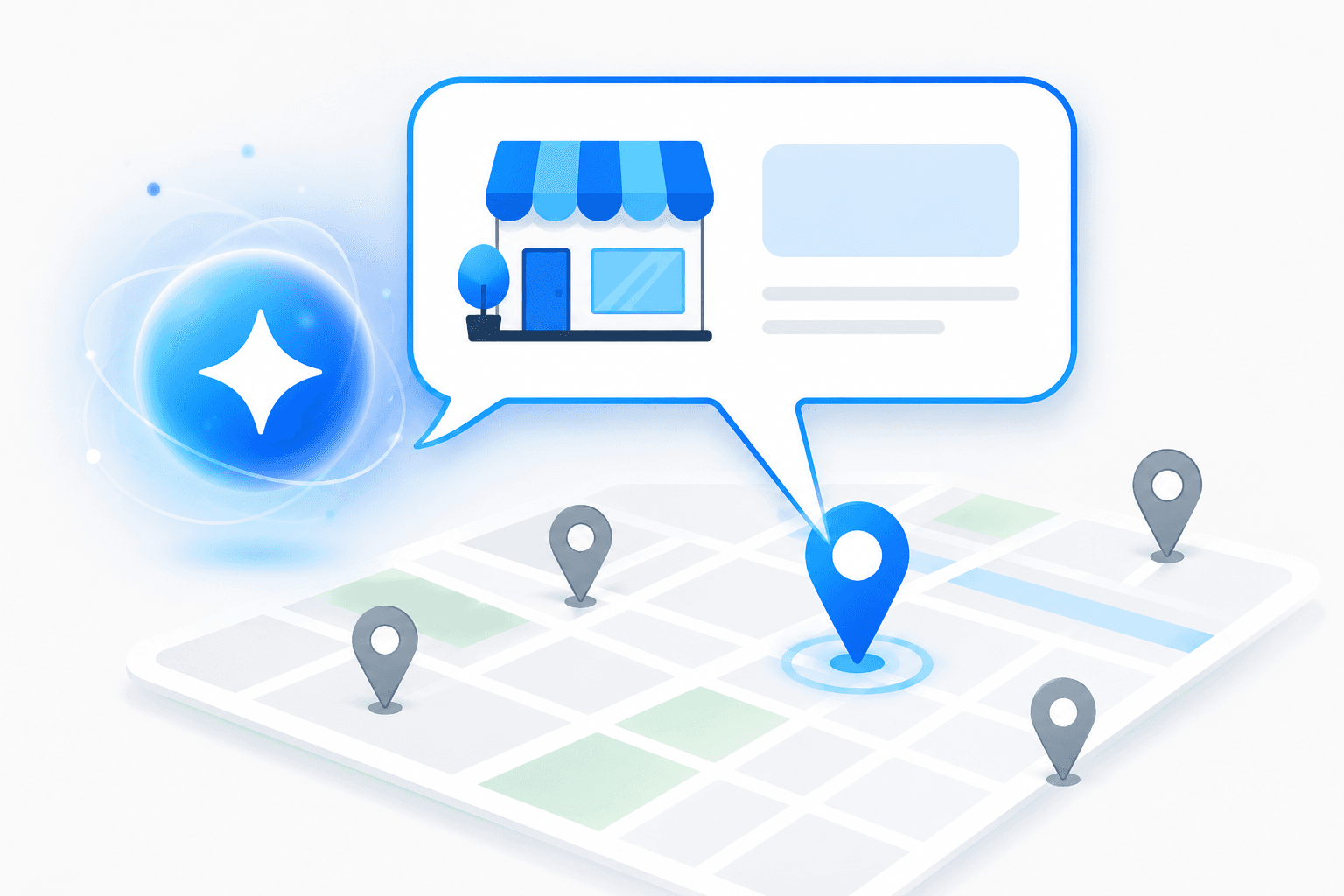
- Search. Someone types "immigration consultant near me" or your name into Google. The thing that does the heavy lifting here isn't a clever website — it's a complete, accurate Google Business Profile: your hours, your location, your phone number, your reviews. It's free, it's the first thing most people see, and a half-filled-in one quietly costs you customers every week.
- Word-of-mouth and referrals. A happy customer tells a friend. Another professional sends someone your way. For most service businesses this is the single biggest source of good work — the people who arrive already half-sold because someone they trust vouched for you.
- Reviews. A close cousin of word-of-mouth, but public and permanent. When a stranger is choosing between you and the next name on the list, your reviews often decide it. They also feed search and increasingly feed AI — one habit, three jobs.
- Social. A presence where your customers already spend time. For some businesses it's a real source of work; for many it's more of a "checking you're real" stop than a place people discover you. Worth a tidy profile; rarely worth pouring your life into.
- The occasional ad. Paid search or social ads can work, and sometimes work well. But they're rented attention — the moment you stop paying, it stops — and they tend to be where small operators waste money fastest, because an ad sending traffic to a leaky business just buys you more lost enquiries.
- AI assistants. Increasingly, your next customer doesn't search at all — they ask ChatGPT or a similar tool "who's good for this near me?" and act on the one or two names it gives. It's invisible, you can't buy your way into the answer, and the rules genuinely favour honest businesses. (More on showing up when customers ask AI.)
An honest order for a small operator
Here's the part most marketing advice skips: these aren't equal, and they aren't where most people spend their money. For a typical small service business, the order that actually pays goes roughly like this.
Reviews and a complete Google Business Profile come first. They're free, they compound, and they sit at the exact moment someone is deciding whether to call you. Get these right and you've done the highest-value thing on the list before spending a penny.
Referrals come a close second — and they're not as out of your hands as they feel. Asking happy customers to send people your way, making it easy for them to do it, staying in touch so you're top of mind: that's quiet, cheap work that throws off your best customers.
Search and a clear site come next: the place people land to check you out and decide, and the one piece of your presence you actually own. (The honest buyer's guide to that piece is here.)
Ads come last, and only when the rest is solid. Pay to send strangers to a business that loses enquiries and you've just paid to lose more of them. Most small operators reach for ads first because they feel like doing something. They're usually the most expensive way to get the least.
It's almost backwards from how it's sold. The free, unglamorous things — reviews, a tidy profile, a word to a happy customer — beat the fancy paid things for most small businesses, most of the time.
Being found is a separate, harder job
The thing to hold onto: building the site is the easy part. Getting people to it is its own discipline, and it's where most of the real effort lives. If you've poured your whole budget and all your energy into a beautiful baseplate and have nothing left for being found, you've built the shop and skipped the street.
You don't need all of it. You need the one channel that fits how your customers actually behave, done properly — and usually that's the free stuff, done consistently, before anything paid.
A quick honest caution while we're here: more traffic isn't automatically the goal, and more enquiries aren't automatically a win — what matters is whether the right people find you and become customers. That's a measurement question worth keeping straight: why more leads is often the wrong goal, and how to tell if your marketing is actually working.
If you want a plain read on how people are finding you now — and the one or two channels actually worth your time — that's exactly the kind of thing I like looking at. It's a fifteen-minute, no-pitch conversation: you tell me how your business works, I tell you what I see. Have a look here.