The Follow-Up You're Not Doing — and the Machine That Does It for You
Most small businesses lose customers to slow or no follow-up, not a shortage of enquiries. What can be automated, what still needs a human, and where to start.
Someone fills in your contact form on a Tuesday afternoon. You're with a client, then it's school pickup, then the day gets away from you. You reply Thursday morning — a perfectly good reply. But by Thursday they've already spoken to two other people, one of whom got back to them in twenty minutes, and the job is gone.
Nothing was wrong with you. You were just busy, and busy is the normal state of a small business. That's the whole problem this page is about: most owners don't lose customers because the enquiries dried up. They lose them in the gap between the enquiry coming in and somebody answering it.
The first to reply usually wins
It's almost unfair how much this matters. When someone reaches out, they're rarely reaching out to only you — they've messaged a few people and they're waiting to see who's on the ball. The first business to come back, even with a short and human note, gets a quiet head start. By the time the slow replier surfaces, the decision is half made.
This isn't about being pushy or hustling harder. It's about not leaving a warm, interested person standing in your doorway wondering if anyone's home. They asked. The least you can do is answer while they still care.
Where people actually drop
If you watch where enquiries leak out of a small business, it's almost always one of these:
- The reply that came too late. The enquiry was fine; the answer was three days behind.
- The reply that never came. It landed in a busy inbox, got mentally filed under "later," and later never arrived.
- The follow-up that stopped after one go. You replied once, they didn't answer, and you let it drop — when a single gentle nudge a few days later would have brought a good chunk of them back.
None of these is a marketing problem. You don't need more leads to fix any of them — and chasing more leads while you're still dropping the ones you have is usually the wrong goal entirely. These are follow-up problems, and follow-up is the rare thing that's genuinely fixable with a bit of plumbing.
What a machine can do for you — plainly
Forget anything fancy. This isn't clever AI writing personalised love letters to your prospects. It's a few unglamorous, dependable steps that run whether or not you remembered:
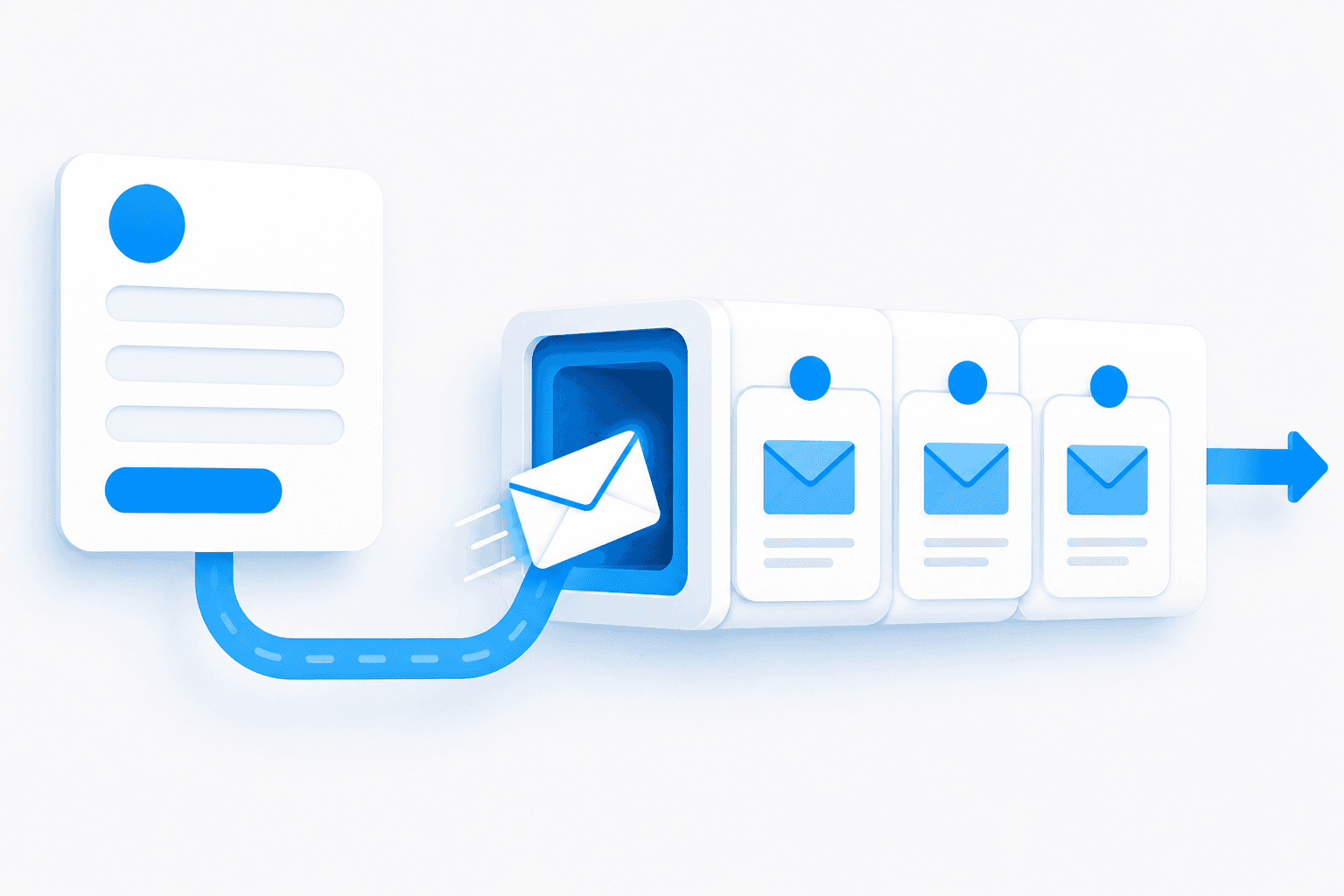
- The instant acknowledgement. The moment someone enquires, they get a short, warm note back — "Thanks, I've got this, I'll come back to you properly by tomorrow." That one message does an enormous amount. It tells them you're real, you're on it, and they can stop shopping around. It costs you nothing once it's set up, and it buys you the time to give a proper reply.
- The reminder to yourself. A nudge so the enquiry doesn't vanish into the inbox — a task, a flag, a text to your phone. The point isn't to automate you out of it; it's to make sure the ball never quietly rolls under the couch.
- The gentle second touch. If a few days pass and they've gone quiet, one friendly follow-up — "Still happy to help if the timing's right" — recovers more people than almost anything else you could do. Most owners never send it, not because they decided not to, but because they forgot. A machine doesn't forget.
That's it. Acknowledge fast, don't lose the thread, nudge once. You can run all three on tools you may already pay for, and the value is entirely in the fact that they happen every single time, not just on the days you had the spare attention.
Where a human still matters — and always will
Here's the honest line, because it's easy to oversell this. Automation is brilliant at the boring, reliable parts: the acknowledgement, the reminder, the nudge. It is not a substitute for you.
The actual conversation — understanding what this person needs, whether you're the right fit, the price, the judgment, the warmth — that's yours, and it should stay yours. The machine's job is to hold the door open and keep the lights on until you can get there. If you ever find yourself fully automating the part where a customer feels listened to, you've gone a step too far, and they'll feel it.
So the right shape is simple: let the machine handle the never-drop-anyone layer, and spend the time it frees up being genuinely good at the human bit. That's also the version that holds up when your customers increasingly judge you on whether you feel like a real, attentive person — which is the same quality that wins in an AI-recommended world.
When it's worth it — and when it isn't
If you're getting a steady trickle of enquiries and you suspect some are slipping, this is one of the highest-return, lowest-cost things you can wire in. It's cheap, it's quiet, and it works while you sleep.
If you're brand new and getting an enquiry a week that you answer within the hour anyway — you might not need any of this yet. Don't build a machine to solve a problem you don't have. The acknowledgement step alone is often enough to start, and you can add the rest the day it actually hurts.
And before you assume follow-up is your leak, it's worth knowing where you're actually losing customers — because the fix is only valuable if it's plugging the right hole. This whole piece is one block on a bigger board; the buyer's guide lays out where it fits.
If you're not sure whether enquiries are slipping through — or which of the three steps above is worth setting up first — that's exactly the kind of thing I like looking at. It's a 15-minute, no-pitch conversation: you tell me how your business works, I tell you what I see. Have a look here.