AI Receptionists and After-Hours Cover: an Honest Take
An honest look at AI receptionists and after-hours cover for small service businesses: what they're good at, the real risks, and when a text-back or a human wins.
Someone calls your office at 8pm. You're at dinner, or it's the weekend, or you're already on another call. They get voicemail, hang up, and call the next name on their list. You never knew they rang. For a service business, that quiet, invisible leak — the enquiry that went cold because nobody was there — is one of the most expensive things that happens to you, precisely because you never see it.
Lately there's a tool being sold as the fix: an AI receptionist. This is the honest take on it — what it actually is, what it's genuinely good at, where it can bite you, and when something simpler or more human is the better call. It's not something I'm selling you; it's a piece of the landscape worth understanding.
What it actually is
An AI receptionist is a layer that answers your phone (or your chat box) when you can't. It can pick up out of hours, handle the common questions — your hours, your address, roughly what you charge, whether you take new clients — and in the better setups, book an appointment straight into your calendar. It speaks in a natural voice, takes a message, and makes sure the enquiry doesn't just evaporate overnight.
Think of it as filling the gap between "we missed the call" and "you waited until Monday." It's not pretending to be you. At its best, it's a competent front desk that never sleeps.
What it's genuinely good at
Three things, and they're real:
- It catches the after-hours enquiry. The call that would have gone to voicemail now gets answered, gets a useful reply, and gets logged. That alone can pay for itself, because the enquiry nobody answered in time is the most common leak in a small business — more on that in where small service businesses lose customers.
- It absorbs the repetitive stuff. "Are you open Saturday?" "Do you do consultations?" "Where do I park?" If you're answering the same five questions all day, handing those off frees you for the work only you can do.
- It can book while you sleep. A caller who can land an appointment at 9pm — instead of being told to call back — is a caller you've kept. The booking made at the moment of interest is the booking you don't lose.
The real risks — and these are not small
Here's where I'd slow you down, because an AI receptionist is speaking for you, in public, to a stranger, when you're not in the room. That's a different level of trust than most tools ask for.
- It can get the facts wrong. If it quotes a price you don't charge, promises a turnaround you can't meet, or tells someone you handle a matter you don't, that's now a thing your business "said." With an immigration consultant, an accountant, a broker — wrong information isn't just awkward, it can be a genuine problem.
- It can sound off-brand. A warm, careful practice can be made to sound like a call centre. Tone is part of what people are buying from you, and a generic voice answering your phone can quietly undercut the very thing that makes you worth choosing.
- The mistake is public. When you misspeak, you can fix it. When a machine speaking as you misspeaks, the customer may never tell you — they just leave with the wrong impression, or a bad taste, and you never find out why. That invisibility is the same reason missed calls hurt, working against you in a new way.
None of this makes the tool bad. It makes it something to test carefully, on a short leash, before you trust it with your front door.
When something simpler is better
Before you buy a receptionist, ask whether you need one — because for a lot of you, you don't. The honest cheaper options:
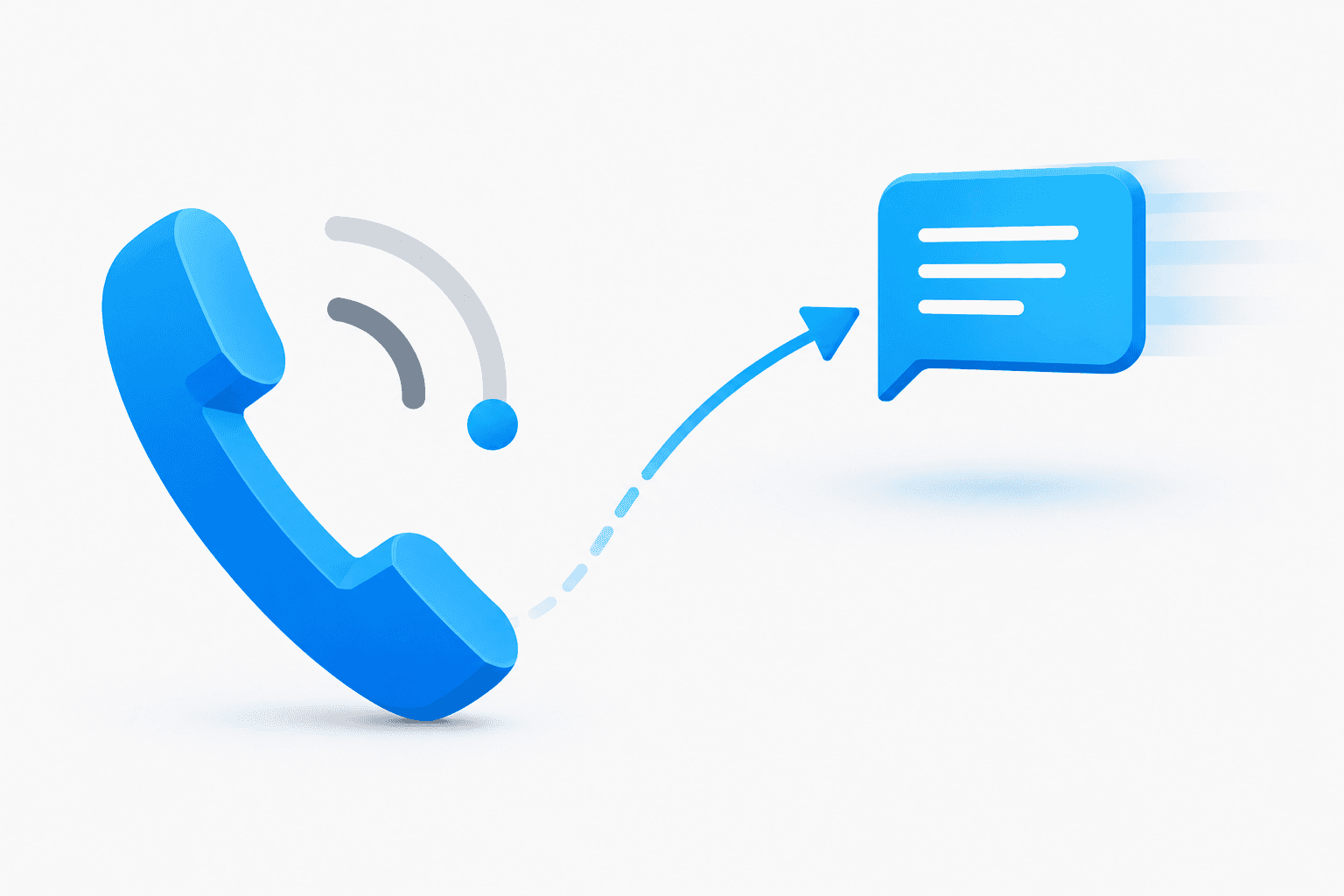
- A missed-call text-back. When you miss a call, an automatic text fires: "Sorry we missed you — what can we help with? We'll call first thing." It's cheap, it's nearly impossible to get wrong, and it catches the same leak without ever putting words in your mouth. For many small businesses this is genuinely the right answer, and the better one.
- A real human service. A live answering service — actual people — costs more, but a person handles nuance, hears distress, and won't confidently invent an answer. For high-stakes, high-trust work where the first conversation really matters, a human is often worth the money.
- Honestly, sometimes nothing yet. If you only miss the odd call and you ring back promptly, you may not have a problem worth solving. Don't buy machinery for a leak you don't actually have.
When it's worth trying
An AI receptionist starts to earn its keep when the volume is real and the questions are routine: you're genuinely missing calls you'd have won, a chunk of them are the same simple questions, and booking is straightforward enough that a careful script can handle it. If that's you, it's worth a trial — with the guardrails kept tight. Feed it only facts you're happy to have repeated word-for-word, listen to its calls for the first while, and give it a clean way to hand off to you, or just take a message, the moment a conversation gets complicated. The skill isn't switching it on; it's drawing the line between what it should handle and what must reach a human.
And whatever you try, judge it on the right thing. Not "look, it answered forty calls" — that's activity, not a result. The question is whether you booked more good work you'd otherwise have lost, which is the difference between more leads and the right ones, and the whole point of learning how to tell if your marketing is actually working.
This is one block in a much bigger board — catching every inbound is just one part of the system that turns visits into customers. If you want the whole map, the small business website buyer's guide lays it out.
If you're not sure whether you're losing calls worth catching — or whether a text-back, a human, or an AI is the right fit for how you work — that's exactly the kind of thing I like looking at. Fifteen minutes, no pitch: you tell me how your business works, I tell you what I see. Have a look here.