Winning Back the Customers You Already Had
The cheapest customer to win is one you already had. A plain guide to a simple win-back for lapsed customers — why it usually beats chasing brand-new leads.
Somewhere in your records is a list of people who used to be customers. They paid you, they were happy enough, and then they just... stopped. Not because anything went wrong. Life moved, the need passed, they drifted. You probably haven't thought about them in a year.
That list is the most overlooked asset in most small businesses. These people already know you, already trust you, and already chose you once. Winning one of them back costs a fraction of what it costs to find a stranger — and almost nobody bothers to try.
Why this beats chasing new leads
When you go after a brand-new customer, you're paying for the hardest part first: getting their attention, earning their trust, proving you're not a risk. That's the expensive, slow work. An old customer has already done all of it. The trust is built. They've been to your door before and it went fine.
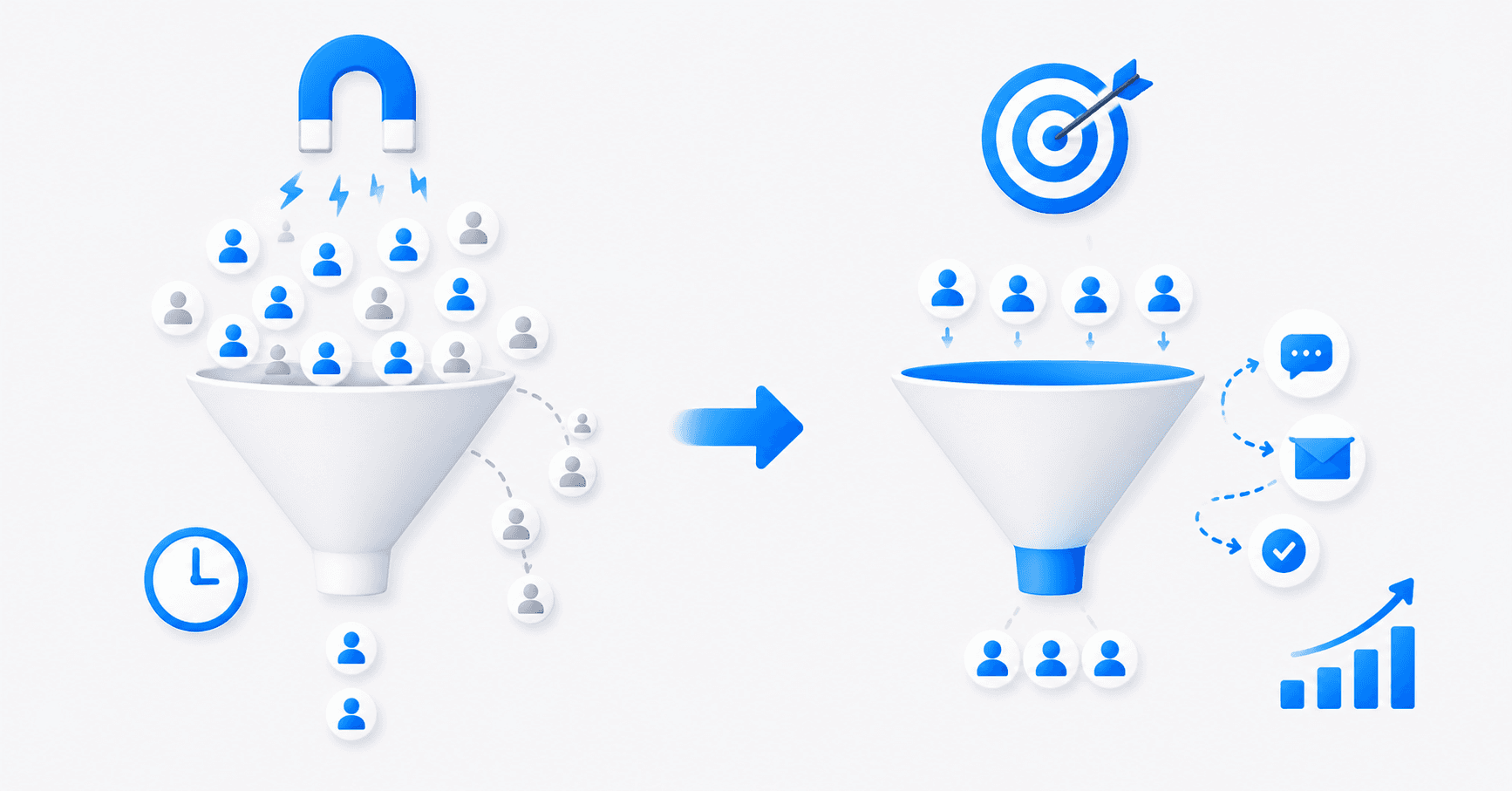
So the maths is lopsided. The same hour spent reaching out to twenty lapsed customers will, more often than not, do more for your week than the same hour spent trying to conjure twenty new ones. Not because new customers don't matter — they do — but because the people who already chose you are the warmest leads you will ever have, and they're sitting right there for free.
This is also why "get more leads" is so often the wrong instinct. More strangers at the top of the funnel feels like progress, but it's the most expensive way to grow. There's more on that here — it's the companion to this one, and worth reading if you've ever assumed the answer to a slow month was simply more.
What a win-back actually is
It's not a campaign. It's three small things, and you can do any of them from your kitchen table this week.
- A genuine check-in. Not a pitch — a real one. "Hi, it's been a while, we were thinking of you, how have things been?" From a person, with a name, sounding like a human. Half the value is just reminding them you exist; people forget good businesses simply because nothing brought you back to mind.
- A reason to return. Something has probably changed since they left — a new service, longer hours, a thing you fixed, a season that's relevant to them again. Give them an actual reason this is a good moment, not just a nudge.
- A small, honest offer. Optional, and only if it fits. A modest "welcome back" gesture can tip someone who was already half-thinking about it. It doesn't need to be big. It needs to feel like a real hand extended, not a discount you'd give any stranger off the street.
That's the whole thing. One warm message, with a reason and maybe a small offer, to people who already like you.
How to do it without it feeling weird
The fear that stops most owners is that reaching out will feel pushy or desperate. It won't, if you do it like a person. Write to a handful of them by name. Mention something real if you remember it. Make it easy to say no, and easy to say yes. You're not selling — you're checking in on someone you used to see regularly. That's a normal, human thing to do, and most people are quietly glad to be remembered.
You don't need software for this. A list, an afternoon, and your own words will do. Later, if it's clearly working, you can let a tool send a gentle check-in automatically a few months after someone goes quiet — but start by hand, so you learn what actually lands before you automate it.
Measure it, lightly
Here's the part that makes this more than a nice idea: it's easy to tell whether it worked. You reached out to a known list of people, and some of them came back. You can literally count them. That's a far cleaner read than most marketing gives you, where you're guessing whether the new enquiry came from the ad, the post, or thin air.
So keep it simple. Who did I reach out to, and who returned? If a quiet afternoon of honest check-ins brings back even a few good customers, you've found one of the best-value moves available to a small business — and you'll know, not hope, that it paid off. (If measuring this sort of thing is new to you, knowing what actually worked versus what only looked busy is a subject of its own.)
Where this fits
Winning back the ones who drifted is one block in the larger system of turning a website and a bit of attention into a business that keeps and grows its customers. It's the cheapest block on the board, which is exactly why it's worth doing before you spend on finding strangers. The buyer's guide lays out the whole picture if you want to see where the rest of the pieces sit.
If you've got a list of old customers gathering dust and you're not sure whether it's worth a Saturday morning, that's an easy thing to look at together. Fifteen minutes, no pitch — you tell me how your business works, I tell you what I see. Have a look here.